Office Clearance in Lambeth

Office clearance in Lambeth needs a careful, orderly approach that respects building access, shared spaces and the items that still have value to the business. We clear workspaces, storage rooms, meeting areas and back offices with a focus on separating reusable items from general waste, so the process stays practical from the first room to the last. For many customers, the aim is to hand back a tidy space that is ready for its next use without unnecessary disruption to staff, tenants or neighbours.
Our service can cover individual desks, mixed office furniture, archived paperwork, shelving, reception items and unwanted equipment that is no longer needed on site. We also handle office clearance work where layout changes, lease end dates or refurbishments call for a prompt and well-organised removal. The work is planned around access, item type and disposal route, so the clearing process stays clear and manageable rather than turning into a rushed strip-out.
If you are comparing options, start with a clear list of what needs to go and any items that must stay in place. A short description of the floor, lift access and parking arrangements helps shape the job, while photos can be useful when the amount of furniture or equipment is hard to describe. A brief call to action is simple: tell us what has to be cleared and ask for a quotation.
Workspace clearance for desks, chairs and storage
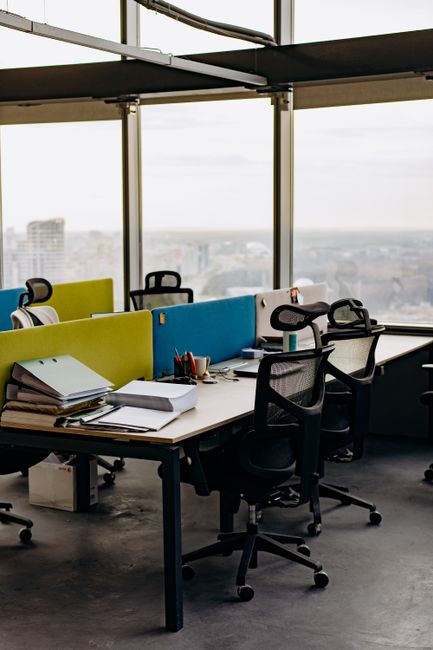
Most office clearances begin with the larger pieces that define the room layout. Desks, pedestals, filing cabinets, task chairs and storage units often need to be removed in a way that protects walls, floor coverings and door frames, especially where corridors are narrow or access is shared. We aim to keep the order of work sensible: bulky items first, smaller loose items next and any remaining light waste last. That makes it easier to keep walkways open and avoid repeated handling.
Where several work zones are involved, it helps to separate fixed furniture from movable items before the job starts. That distinction often affects timing and disposal planning, particularly if some pieces are being kept, passed on or moved elsewhere. A useful note: if storage cabinets still contain files, stationery or old supplies, those contents should be accounted for before clearance begins so nothing important is overlooked. For broader removals that include mixed waste as well as furniture, our business waste removal page is a relevant next step.
Clearance that respects the remaining office fit-out
Many Lambeth offices are not empty shells; they may still have lighting, glazing, partitioning or fitted reception features that need to remain undisturbed. In those settings, clearance is less about brute removal and more about working carefully around what stays. We pay attention to shared halls, loading points and the sequence in which rooms are emptied so that occupied parts of the property can continue to function where needed. That is particularly useful when only part of a floor is being reworked or handed back.
Paperwork, archives and confidential office material

Offices often contain a mix of visible furniture and less visible clutter such as archived folders, boxed documents, old binders and shelving full of paperwork. These items need a measured approach because they are rarely all handled in the same way. Some can be removed as standard waste, while others may need sorting before disposal. Where document security matters, the safest plan is to identify what is to be retained, what is destined for secure destruction and what can leave with the rest of the clearance.
Because paperwork can fill cupboards, under-desk storage and entire archive rooms, a good clearance plan treats it as a separate stream rather than a last-minute extra. That is especially useful when a business is closing a department, updating records or emptying an office after a move. We can combine paper-heavy areas with flat clearance style mixed-item removals where the site includes staff accommodation, but the key is still to sort items carefully before anything is taken away.
Two details usually make the job smoother: a simple room-by-room note of what remains and what is to be removed, and a clear decision on any boxed papers that should not be mixed with general waste. If there are sensitive materials, keep them separate from ordinary office rubbish from the outset. Once those decisions are made, the clearance can proceed in a more orderly way and with less chance of re-handling items later.
Equipment, screens and mixed office contents
Modern offices rarely contain furniture alone. Computer screens, printers, small peripherals, desk accessories and storage equipment often form part of the same clearance, and each category may need different handling. The practical issue is not simply lifting and removing items; it is recognising what can be reused, what should be recycled and what must be dealt with as waste. We organise the removal around those differences so the space is cleared without turning every object into an undifferentiated load.
Where an office has accumulated several generations of equipment, it is worth separating the obvious reusables from items that are beyond use. That can include old stands, monitor arms, obsolete shelving, noticeboards and mixed cabinet contents. If the clearance also includes fixtures or surplus domestic-style contents from an ancillary room, a related option is our home clearance service, though the office work remains distinct in planning and handling. The aim is always to keep useful items distinct from general disposal.
- desks, chairs and storage units
- paper files, folders and boxed archives
- screens, printers and small office equipment
- reception items, shelving and loose contents
- mixed waste that remains after sorting
Preparing for a quotation and booking a clearance

When you ask for a quotation, the most helpful information is the simplest: what kind of office it is, what items need removing, which floor the space is on and whether there are access restrictions. If the clearance is part of a lease handover or refurbishment, mention any deadline that affects the sequence of work. Clear notes help shape the work properly and reduce the need for follow-up questions. A concise enquiry also makes it easier to compare like with like when assessing different service options.
Photographs are useful where the room contents are hard to describe, especially if shelves, cupboards or storage areas are involved. A few images of the main rooms, any bulky furniture and the access route can give a better sense of the job than a written list alone. When the office contains a mix of furniture and non-office items, we can often advise on the most practical way to group them before removal. If you want a pricing starting point, see our pricing and quotes page for the general approach.
One practical tip: decide early whether anything is staying on site, because last-minute changes can slow the clearance and make the room harder to work through in order. A short, accurate list of removals is usually better than a vague description of the entire floor. Once the scope is fixed, the next step is straightforward: ask for a quotation and choose a date that fits your handover or refit plan.
Access, building rules and safe handling
Office buildings often create their own rules for clearance work, from lift booking and loading bay access to restrictions on noisy activity or item movement through common areas. Those rules matter because they affect how a clearance is sequenced and what can be moved safely at any one time. We take a planned approach to handling so that furniture, equipment and loose contents are managed with attention to the building rather than lifted impulsively through busy corridors.
Where an office sits within a shared premises, care is especially important around entrances, stairs and narrow routes. Bulky items may need to be turned, dismantled or carried in stages, and that choice depends on the layout rather than on a standard formula. If you are dealing with a mixed premises that includes stored materials or maintenance waste, our waste removal page explains a broader clearance option. For a true office job, though, the main focus remains on controlled removal from the working environment.
Choosing the right scope for the site
Not every job needs a full strip-out. Some customers only want selected rooms cleared, while others need a complete emptying ready for refurbishment or end-of-tenancy checks. The right scope depends on what remains in use, what must be retained for later and what can leave now without causing disruption. Taking time to define that boundary is often the difference between a tidy, efficient clearance and an awkward second visit to collect overlooked items.
Furniture removal, recycling and re-use decisions
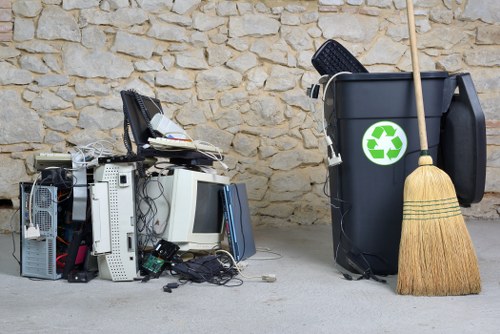
Furniture is often the largest part of an office clearance, but it is also the easiest area to make sensible decisions about. Some items can be kept in service elsewhere, some are suitable for recycling and some are simply no longer fit for use. We work through those categories carefully so that chairs, desks, cabinets and storage units are assessed as part of a single practical process rather than treated as identical waste. That approach reduces confusion and helps the clearance stay ordered from start to finish.
Where items are in reasonable condition, it can be useful to separate them before the main clearance begins. A few pieces may be earmarked for another room, while others may be grouped for removal together. If your project also involves an office reception area or a waiting room, the same method applies to tables, stools and display furniture. For standalone pieces, our furniture clearance service is a useful related page, while furniture disposal covers the end-of-life side of the work.
Different materials often travel different routes once they leave the office, so the sort order can matter. Metal, wood, mixed board materials and upholstered items do not always move through the same disposal stream, and that is another reason to keep the contents of the office visible and organised. If you are unsure which items should be grouped together, a simple inventory helps more than guesswork and makes the quotation process clearer as well.
About Lambeth
Lambeth is a large inner-London district on the south bank of the River Thames, stretching from the riverfront at Vauxhall and Lambeth to neighbourhoods such as Brixton, Kennington, Stockwell, Clapham, Streatham and Norwood. Its character changes markedly from place to place: there are dense urban streets close to the river, broad Victorian and Edwardian terraces in several residential quarters, and a mix of civic, cultural and transport landmarks that reflect long periods of growth. The borough takes its name from the historic Lambeth parish, once shaped by marshy ground, river crossings and the presence of Lambeth Palace, the London residence of the Archbishop of Canterbury for many centuries. South Bank views, rail and Underground connections, and major roads have all influenced the area’s development, while local high streets have remained important centres of daily life. Brixton has long been associated with markets, music and social change; Kennington contains significant historic housing and public spaces; and the wider district includes parks, churches, estates and institutions that reveal different layers of London history. The river edge, particularly around Albert Embankment and the approaches to Waterloo Bridge and Westminster Bridge, places Lambeth in close contact with central London, yet its streets and squares retain a strong local identity. Green spaces such as Brockwell Park and Clapham Common sit alongside busy transport corridors, and the borough’s built environment ranges from Georgian remnants to post-war redevelopment and contemporary housing. Cultural venues, markets and places of worship add further variety, making Lambeth one of south London’s most distinctive urban landscapes.
Office moves, end-of-lease clearances and phased removal
Some office jobs are not a single emptying exercise but a phased process tied to moving day, refurbishment stages or the end of a tenancy. In those cases, the clearance needs to work around what is still active on site and what can safely be taken away in advance. We plan removals in an order that suits the property: first the items that are already redundant, then the larger furniture, and finally the smaller remaining contents once the workspace is ready to hand over.
Phased work is especially helpful where departments are relocating separately or where the office contains both shared areas and private rooms. If the job extends beyond standard office contents into adjacent storage, a loft clearance style approach may be relevant for awkward upper-level spaces, although the exact method still depends on the site. For some customers, the best result comes from pairing the office plan with a clear end point: once the agreed rooms are empty, the remaining tasks become easier to close off.
To keep a phased clearance efficient, it helps to group items by room or function rather than by convenience. Labelled piles, clear access routes and a final check of cupboards and drawers can prevent missed items and avoid returning for a second sweep. That practical order matters whether the space is a small office, a suite in a larger building or a floor being handed back at the end of a lease.
Waste handling, sorting and final checks
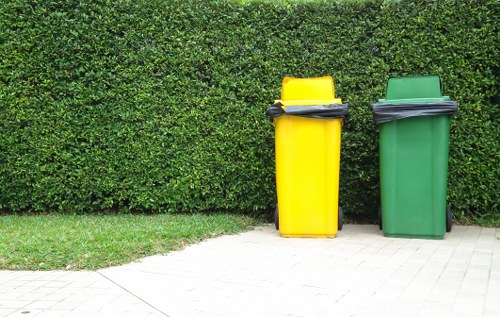
After the obvious furniture and equipment have gone, the remaining value of a careful office clearance lies in the final sort. Loose files, broken accessories, packaging, obsolete stationery and general waste often collect in corners or storage areas, and these items deserve the same organised approach as larger objects. We keep the work structured so that the last stage does not become a hurried gathering-up exercise. A tidy finish matters because it leaves fewer loose ends for the customer to manage after the space is vacated.
Sorting also helps decide which items belong with a standard office clearance and which are better handled through a more specialised route. If the site contains workshop-style material, light building debris or maintenance waste alongside the office contents, a relevant related service is builders waste clearance. Where sustainability is a concern, it is sensible to think about the route each category takes and how reusable items are separated from ordinary disposal streams before the job is complete.
If you are ready to move forward, the most useful next step is to send a clear list of the rooms and items involved and ask for a quotation. A short enquiry gives us the framework for planning the work properly, and it gives you a straightforward way to compare the options available. For general information about responsible disposal and reuse, our recycling and sustainability page is a helpful companion. When you are ready, get in touch and request a quotation.